Best startup databases for investors
Eight startup databases compared on the data each one leads on, where that data comes from, and how to choose the right one for your fund.


- Published
- November 13, 2026
 ChatGPT
 Claude
 Gemini
Contents
Key takeaways
- Founder signals for pre-seed sourcing:
 Specter and
 Harmonic
- Estimates between rounds: Specter and
 Dealroom
- Terms and cap tables for pricing deals:
 PitchBook
- LP data for fundraising: PitchBook
- A fine taxonomy for one sector:
 Tracxn
- Primary research for a market thesis:
 CB Insights
- Depth in one region:
 Beauhurst, for the UK, Germany and Ireland
No single startup database is best at everything, and each of the eight below leads on a different kind of data. For most funds, Specter is the best overall pick because it holds all five kinds of data investors need in one place: founders, companies, investors, funding and revenue. The others are the better choice when one specific kind of data matters most, and the table below shows which.
Databases differ because they are built from different sources: people and their job moves, deal records gathered from investors, funding announcements, or government registries. The source decides which companies a database finds first and which it misses, so choose by the data your strategy relies on rather than by the largest coverage number.
We compared each database on the five kinds of data, how that data is collected and refreshed, how you can get it out, and how it is priced. Figures come from each vendor's own pages, checked in November 2026. We make Specter, and we've held it to the same standard, including its limits.
At a glance
The table shows what each database is best at. Each gets a fuller section below.
| Database | Best for |
|---|---|
| Specter | Founder-to-funding data in one place |
| PitchBook | Deal terms, cap tables and LP research |
| Harmonic | Early-stage founder discovery |
 Crunchbase | Self-serve research on a budget |
| Dealroom | Government-sourced funding data |
| CB Insights | Technology market research |
| Tracxn | Sector specialists |
| Beauhurst | UK, German and Irish private companies |
The 8 best startup databases for investors
1.  Specter
Best overall for founder-to-funding data.
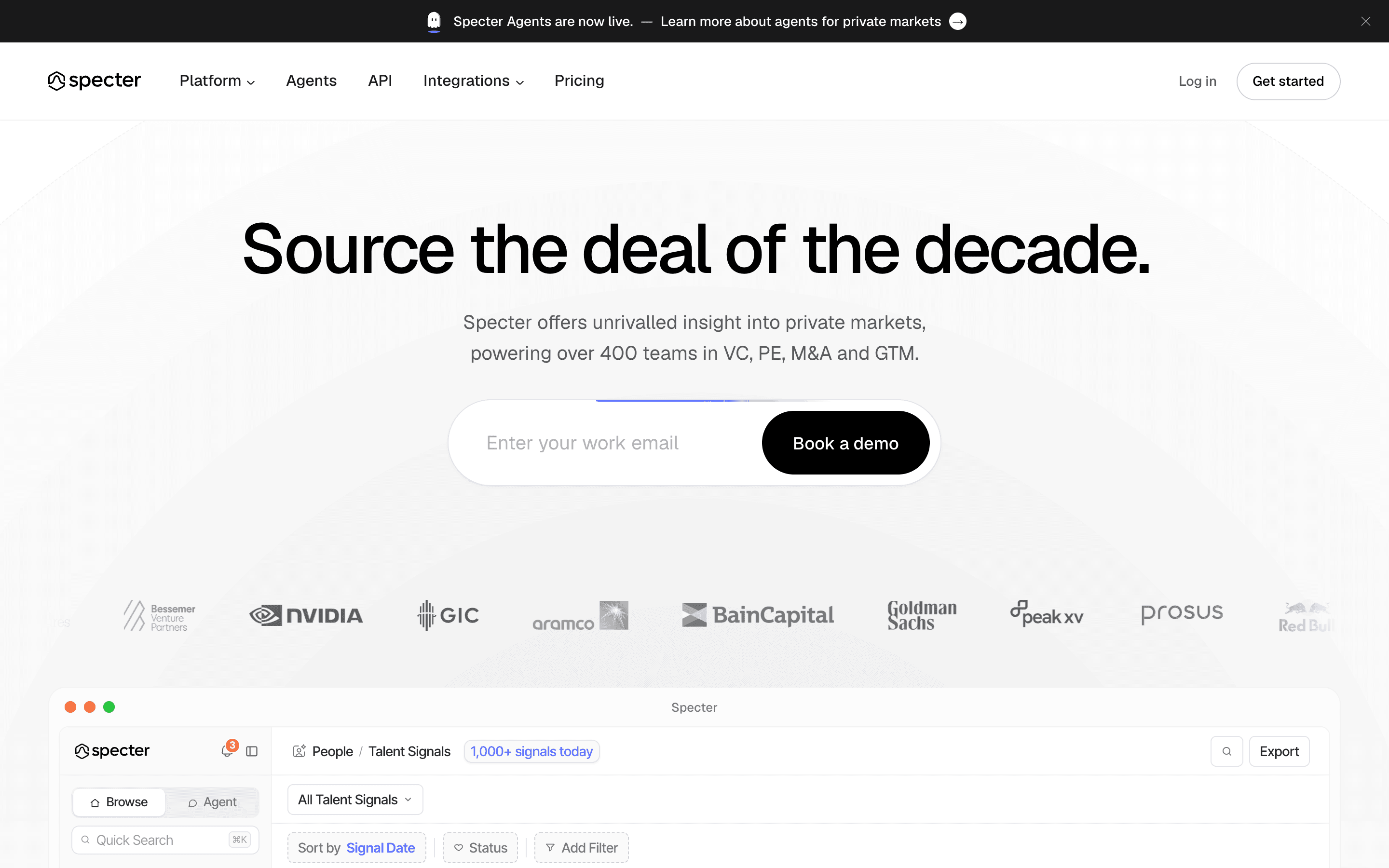
Specter is a private markets database that links people, companies, investors and transactions in one place. It holds 700M+ people, 50M+ companies, 350K+ investors, and 1M+ funding rounds, acquisitions and IPOs, and more than 400 investment teams use it. Because the records are linked, you can follow a company from its founder's first job change to its latest round without switching tools.
Specter also publishes signals when something changes, not just records of what already happened. It produces 1,000+ talent signals a day and 7,000+ investor-interest signals a week, which can surface a founder while their new company is still listed only as "Stealth", before other funds hear about it. For companies that haven't announced numbers, Specter models monthly revenue and a live valuation, each with a confidence band and anchored to verified disclosures. You can see which quiet companies are growing, and how far to trust each estimate.
Specter suits funds that source from pre-seed to growth and want one database instead of several. Its main limits are that there's no self-serve plan and its valuations are estimates, so PitchBook goes deeper on negotiated terms and cap tables. Pricing is by quote, and API access requires a platform seat. Gideon Hayden, Partner at Leaders Fund, says Specter is part of how the fund ensures "100% coverage of the markets we operate in".
2. PitchBook
Best for deal terms, cap tables and LP research.
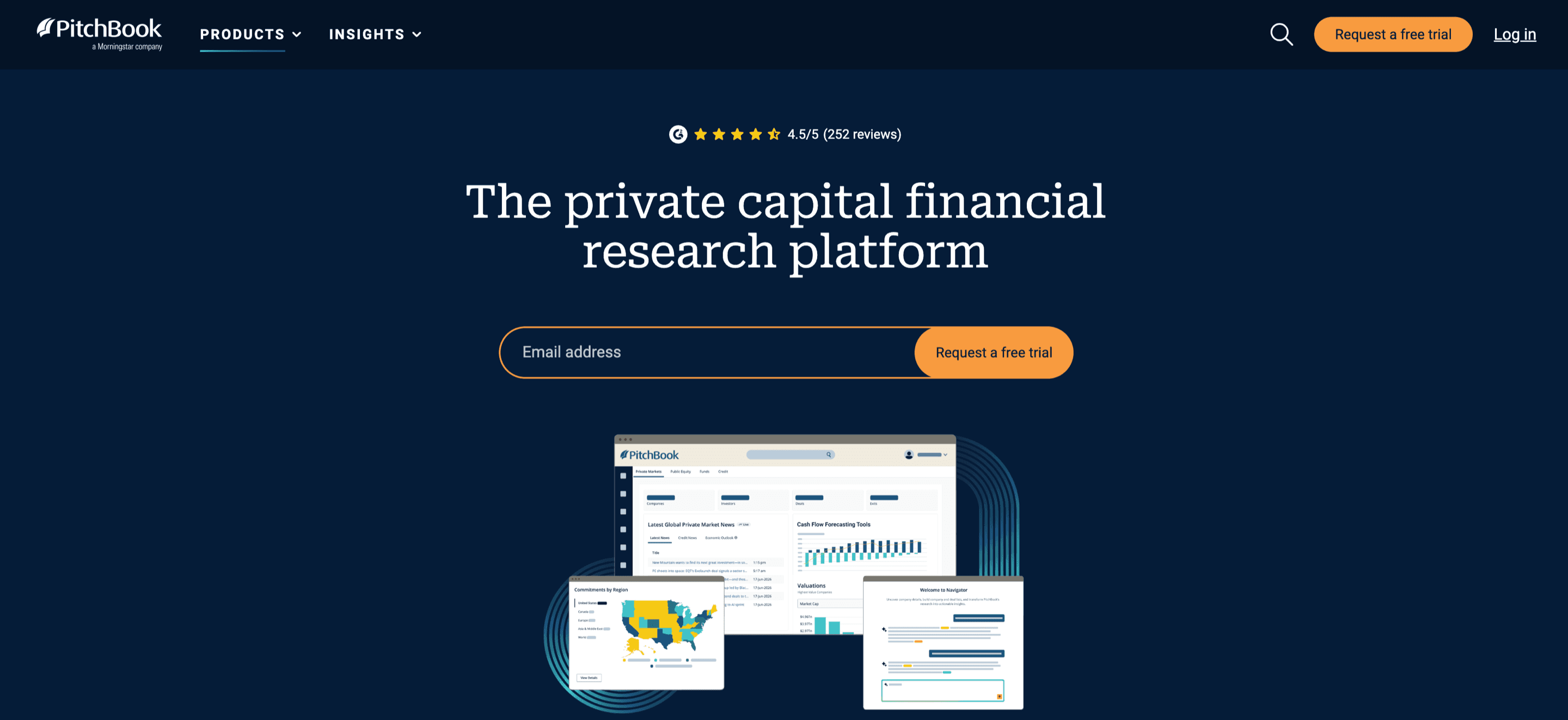
PitchBook gathers much of its data by asking firms directly rather than waiting for announcements. Its research team contacts firms quarterly and reaches out to a company within 48 hours of a new round appearing, which is how it records terms, ownership and cap tables that never appear in a press release. It also has the deepest investor and LP coverage on this list: 570K investors, 147K funds and 56K LPs as of May 2025, plus daily valuation estimates for 15,000+ VC-backed companies since February 2026.
PitchBook suits growth and late-stage investors who price deals, and funds researching LPs for their next raise. Its main limit is the earliest companies, so test seed-stage coverage before relying on it for discovery. Harmonic's comparison cites user reports of three to four months between PitchBook company updates. Pricing is by quote, and API access needs a separate agreement, according to Hustle Fund's comparison.
3.  Harmonic
Best for early-stage founder discovery.
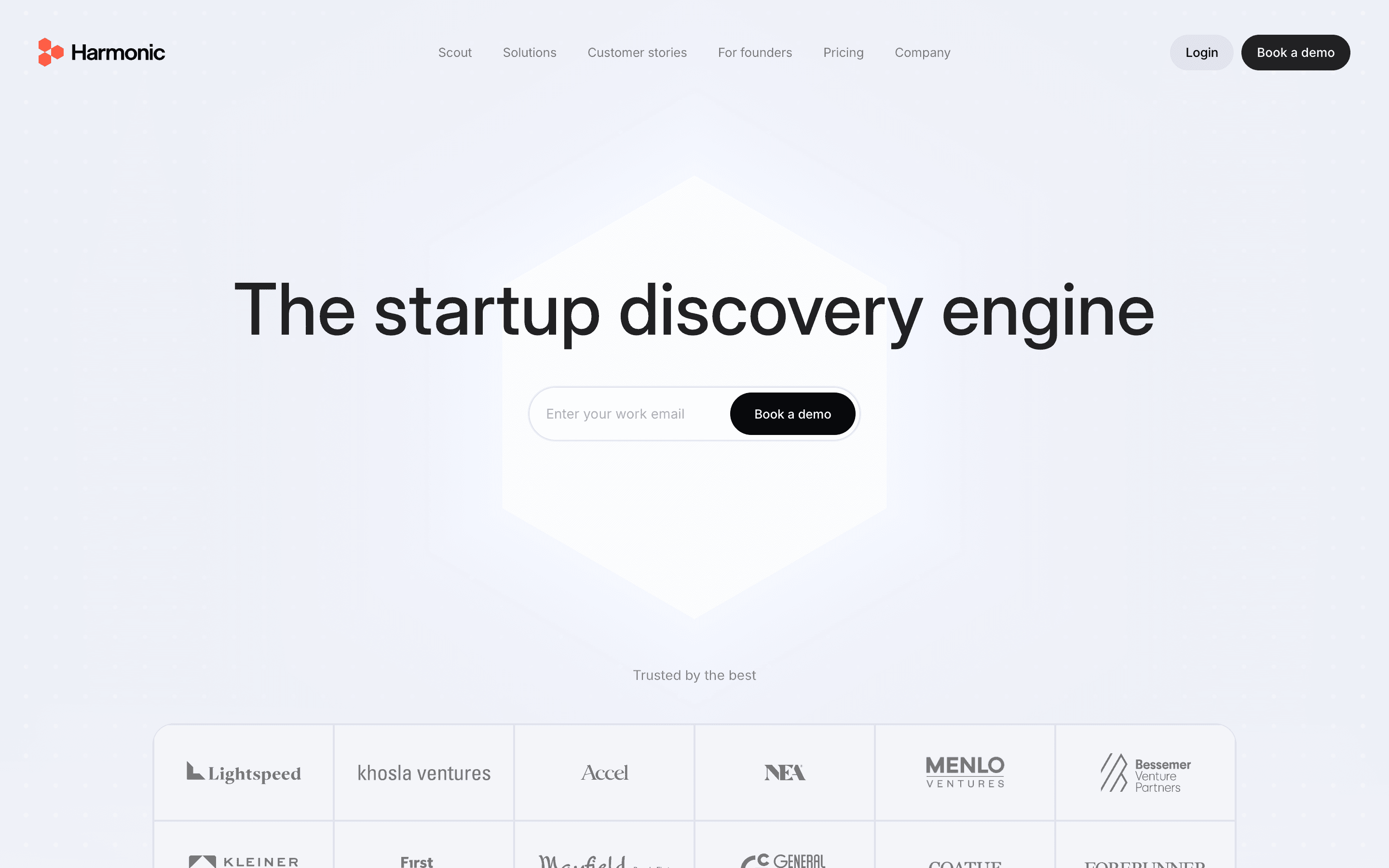
Harmonic builds its records from "legal filings and dozens of public data sources" and from founders who submit their own companies through a form on its site. Its pricing page lists 200M people and 40M companies, and its blog says priority companies are refreshed daily. Founder submissions and people data help it pick up companies that haven't announced much yet. Scout, its AI agent, lets you search in plain English instead of building filters, and returns structured company evaluations.
Harmonic suits early-stage teams whose sourcing starts with founders. Its main limit is that financing data costs extra outside the app: financing and investor data are an add-on on API and bulk plans, and bulk files refresh weekly. Ask which coverage figure applies to your plan, since its FAQ says 35M+ companies and 195M+ people, lower than its pricing page. Pricing is by quote.
4.  Crunchbase
Best for self-serve research on a budget.
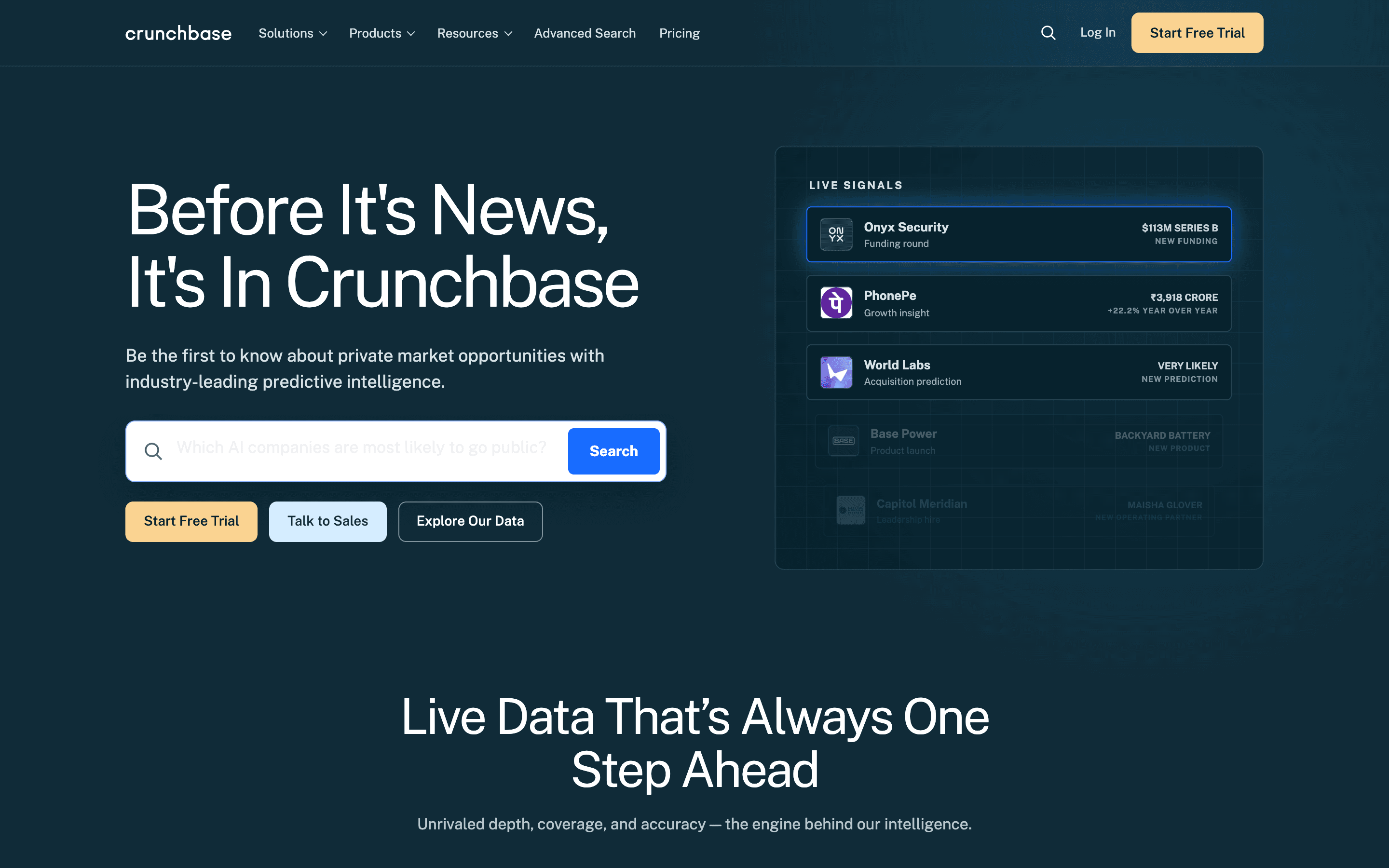
Crunchbase covers the basics most investors need: companies, funding rounds and valuation insights, with AI search. It lists 4M+ private companies and 30M+ data updates a year. It's the only database here you can start on a monthly plan with a free trial, so you can test it this week without a sales call.
Crunchbase suits angels, scouts and small funds. Its main limit is how much data you can take out: Pro allows 2,000 exported rows a month and Business 5,000, and API access needs a custom contract. Pro costs $99 a month, or $49 a month billed annually in the first year, and Business starts at $199 a month.
5.  Dealroom
Best for government-sourced funding data.
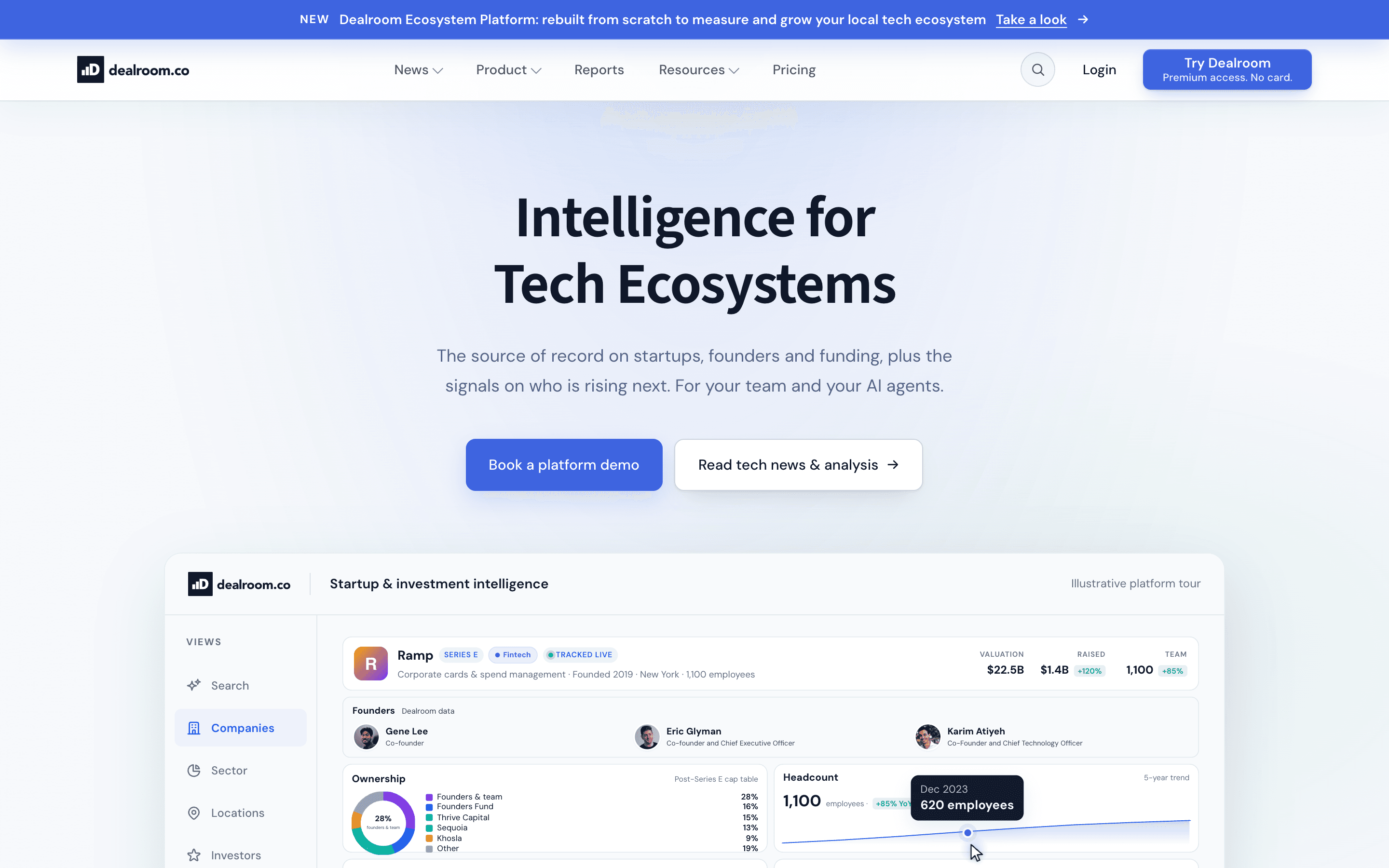
Dealroom gets part of its data through partnerships with over 100 governments, which gives it funding records companies never publish themselves. Its funding data goes beyond announced amounts: it tracks 336K+ VC rounds globally since 2018, with post-money valuations, cap tables and secondary marks. It also lists 18M+ founder and operator profiles and revenue estimates with verified ARR.
Dealroom suits funds that want funding data from official sources and prices they can see up front. Its limits are that the API is a paid add-on, and its stealth-company detection is worth testing on companies you know. Premium costs €350 per seat a month at the three-seat minimum (€12,600 a year), falling to €250 a seat at ten seats, and there is a three-day free trial.
6.  CB Insights
Best for technology market research.
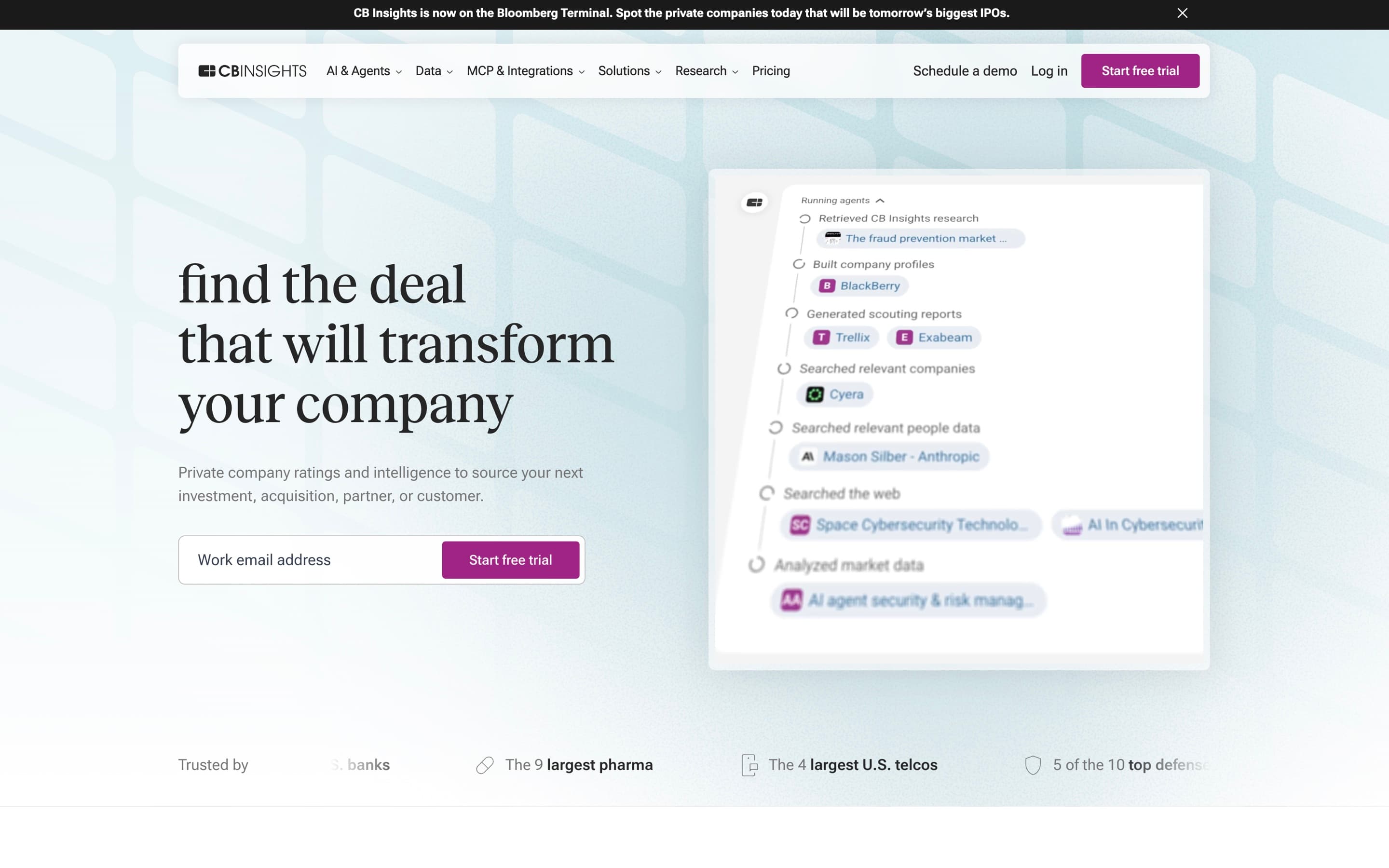
CB Insights pairs a large company database with research its own analysts collect. It lists 13M+ company profiles and hundreds of founder and operator interviews a week, with transcripts, plus rankings across 1,700+ technology markets and 1.5M deals, 20% of them reported directly by investors. That gives you first-hand evidence for a thesis on a market, not just a list of companies in it.
CB Insights suits investors building a thesis or memo on a technology market. In our view it's built to explain markets more than to find companies early, so most funds pair it with a sourcing database. Pricing is by quote, with a free trial.
7.  Tracxn
Best for sector specialists.
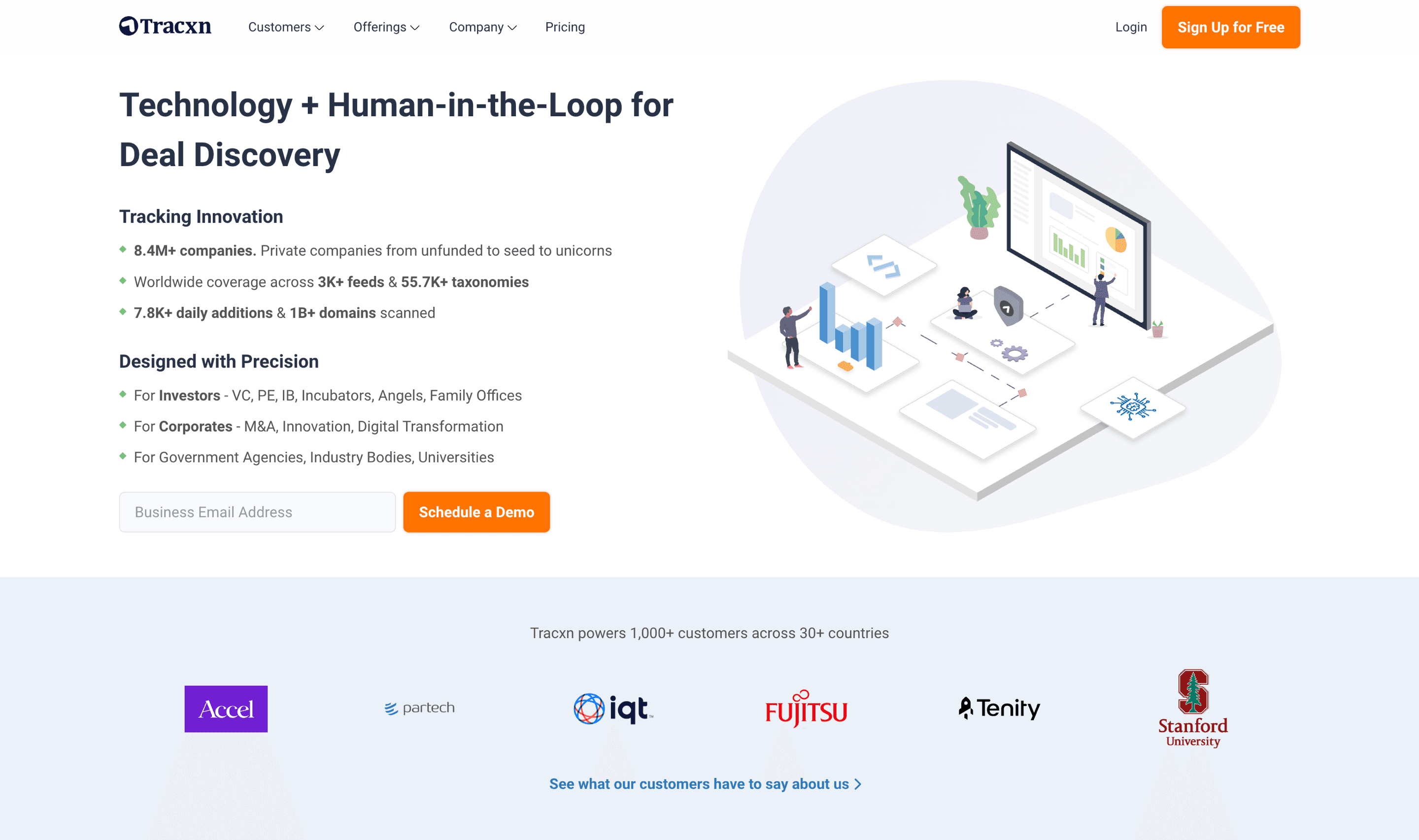
Tracxn files companies into the most detailed published taxonomy on this list: 8.4M+ companies across 3,000+ sectors and 55,700+ business models. You can define a segment by how companies make money, so a narrow search doesn't miss companies filed under a broad label. Premium adds deal and financial data, including valuations, cap tables, revenue and headcount trends, and 2M+ funding rounds.
Tracxn suits sector specialists who want a repeatable view of one segment. Its limits are per-user costs: there are no shared logins, so every user needs a seat, exports use credits, and API access is sold separately. Lite is free with strict usage limits, and Premium is by quote.
8.  Beauhurst
Best for UK, German and Irish private companies.
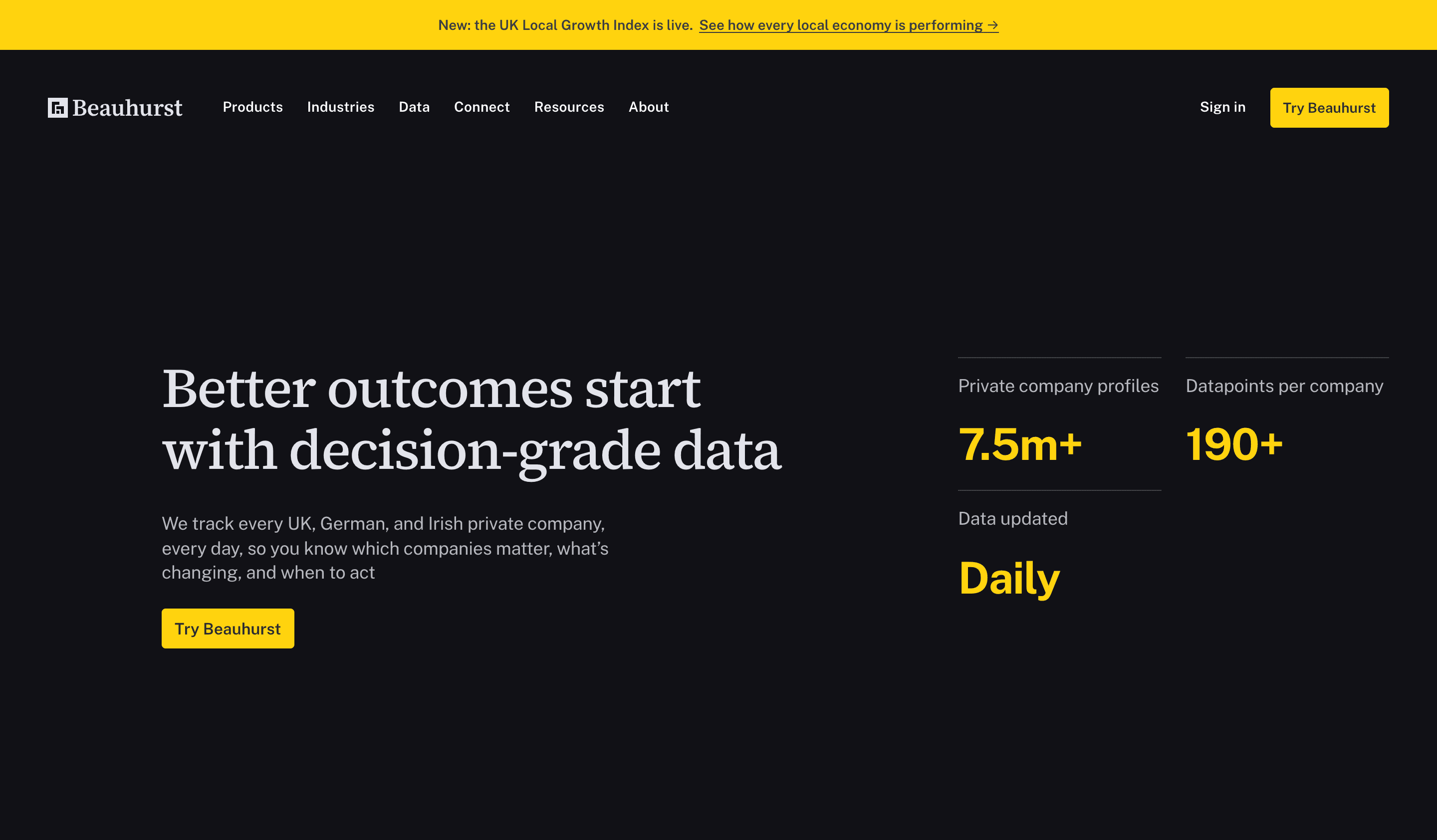
Beauhurst focuses on private companies in three countries rather than the whole world. It lists 7.5m+ private companies in the UK, Germany and Ireland, with 190+ data points each, updated daily. Its data is checked by human analysts, and it says it finds fundraisings and acquisitions that were never announced. If most of your deals are in those countries, you get a more complete picture there than a global database may give you.
Beauhurst suits funds that invest mainly in the UK, Germany or Ireland. Its limit is the flip side of its focus: outside those three countries you'll need another database. Pricing is by quote.
How to choose a startup database
All eight will find well-known companies. They separate on data that's hard to get. So start by naming the data you can't do without, then shortlist the databases that lead on it.
A database can only show what its sources reveal. Ask each vendor where its records come from and how long a newly founded company takes to appear, not just how often its system runs.
Test your shortlist on 20 to 25 companies you know, including a few you met while they were in stealth. Check that each is there, that the founders, latest round and lead investor are right, and how early each database recorded it.
Pricing
Most of these databases quote on request. Only Crunchbase and Dealroom publish prices, and Tracxn has a free tier. When comparing quotes, check which datasets are included and whether API or bulk access costs extra.
FAQ
What is a startup database?
A startup database is a searchable set of records on private companies, their founders, investors and funding rounds, used to find, research and track companies.
What is the best startup database for venture capital?
It depends on the data you need. Specter covers the widest range in one place, PitchBook leads on terms and LPs, and Crunchbase is the easiest to start with.
Is there a free startup database?
Tracxn Lite is free, and Crunchbase, Dealroom and CB Insights offer trials. SEC Form D filings (US) and Companies House records (UK) are free to search.
How do I find stealth startups?
Follow people rather than companies. A stealth company has no website or announcement yet, but its founder's job change shows up, and people-tracking databases like Specter and Harmonic flag it.