Best deal sourcing platforms for venture capital
A comparison of seven deal sourcing platforms, including Harmonic, PitchBook, and Crunchbase, and how to choose the right one for your fund.


- Published
- November 2, 2026
 ChatGPT
 Claude
 Gemini
Contents
Deal sourcing platforms overlap on company search, but they're built for different parts of an investor's work. Some start from founders and people data, some from ownership and transaction records, and some from the market around a company. This guide compares seven of them on what they cover and where each one fits, based on each vendor's public product pages and documentation as of October 2026.
We build  Specter, and it's our pick for a team that wants one platform for everyday sourcing and research. It has the broadest coverage in this comparison, and its talent, revenue, and investor-interest signals help a team decide which companies to contact first. For ownership data, ecosystem research, or self-serve lookups, another platform on this list may fit better, and we say which.
Key takeaways
- Specter is our pick for everyday sourcing and research, with the broadest coverage and talent, revenue, and investor-interest signals.
 Harmonic overlaps with Specter on startup and founder discovery and AI research, across a smaller dataset.
 PitchBook suits ownership, valuation, and transaction research.
 Crunchbase suits self-serve funding lookups.
 Dealroom,
 Tracxn, and
 CB Insights help you map ecosystems, sectors, and technology markets.
- Treat signals as leads to investigate and verify key facts at the source.
Quick overview of the best deal sourcing platforms
 Specter |  Harmonic | PitchBook |  Crunchbase |  Dealroom |  Tracxn |  CB Insights | |
|---|---|---|---|---|---|---|---|
| Company search | Yes | Yes | Yes | Yes | Yes | Yes | Yes |
| Founder and people data | Yes | Yes | No | No | No | No | No |
| Funding and investor data | Yes | Yes | Yes | Yes | Yes | Yes | No |
| Signals and alerts | Yes | Yes | No | Yes | Yes | Yes | Yes |
| AI-assisted research | Yes | Yes | No | No | No | No | No |
| Market and sector research | Yes | Yes | Yes | No | Yes | Yes | Yes |
A closer look at each platform
1. Specter
Best overall: the broadest coverage and unique signals for sourcing from seed to growth.
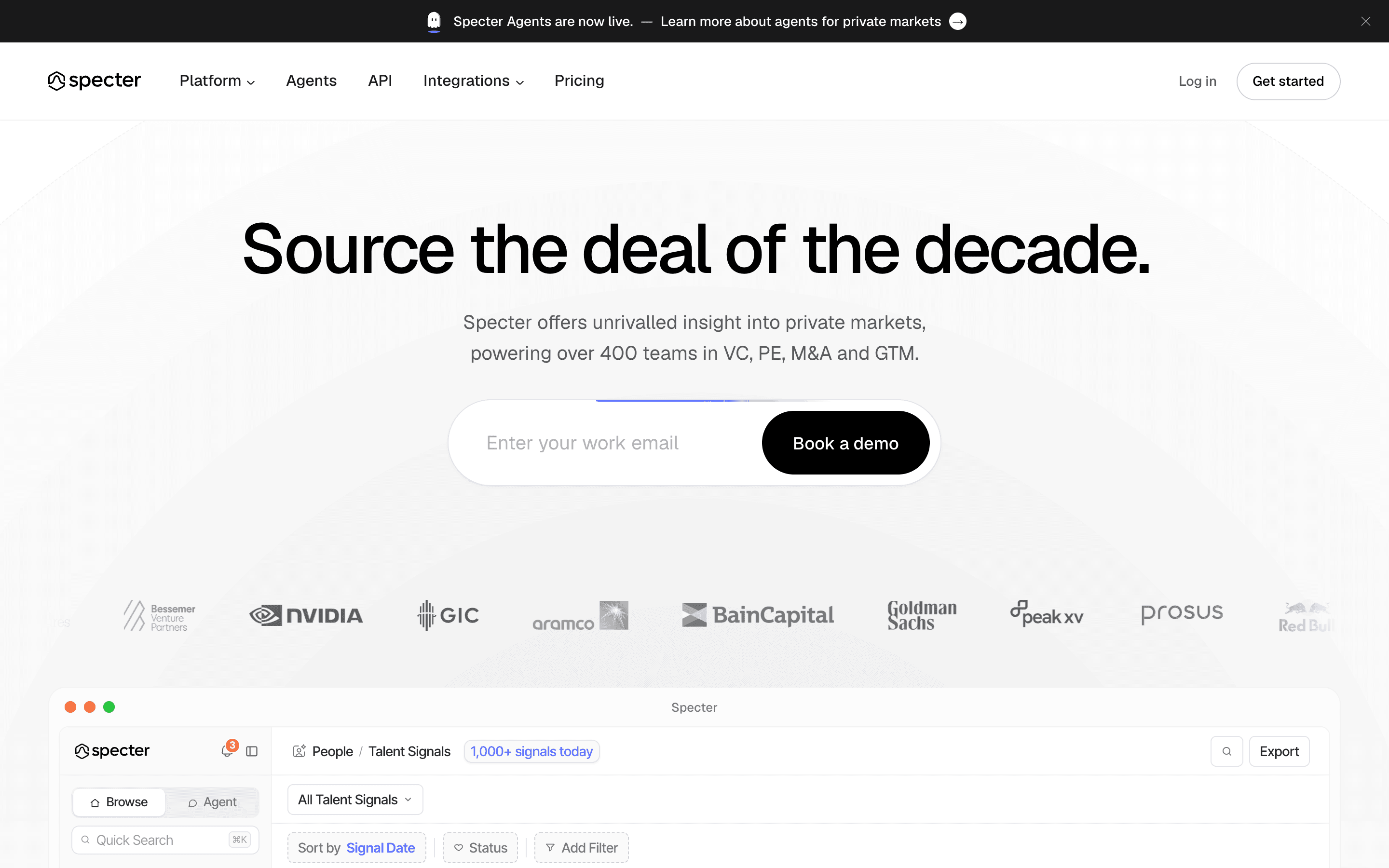
Specter covers 50M+ companies, 700M+ people, 350K+ investors, and 1M+ transactions in one platform. Where a team starts in that data depends on its stage. A growth investor can examine a company's previous rounds and investors, its competitors, its revenue, and the funds backing its market before approaching the team. A seed investor can start earlier, with a founder's career history or with operators leaving companies in a sector the fund knows well.
The AI agent does that research across Specter and the web. It builds a market map for a sector, screens companies against the fund's criteria, and writes sourced company and founder briefs. A team can tune it to its thesis, save recurring jobs such as a sector screen or a first-meeting brief as reusable skills, and schedule saved searches and watchlist digests.
The signals answer a different question: when to revisit a company or contact a founder. Talent Signals track career moves and new-company activity. Interest Signals show which investors are paying attention to a company or person, with dates, strength scores, and financing context. Together they help teams find founders and companies before they show up in other databases. Revenue research combines sourced disclosures with modeled estimates, so a growth investor can assess a company between financing announcements.
We put Specter first because one team can map a market, find and screen targets, research founders and financing, and monitor what changes, without buying a separate tool for each job.
Specter- Best fit
VC teams that want the broadest company, people, and investor coverage, unique signals, and AI research in one platform, from seed to growth.
- Key features
- Company and founder discovery
- Financing and investor research
- Market mapping and screening
- Signals and growth research
- Monitoring and delivery
2. Harmonic
For startup and founder discovery with AI-assisted research.
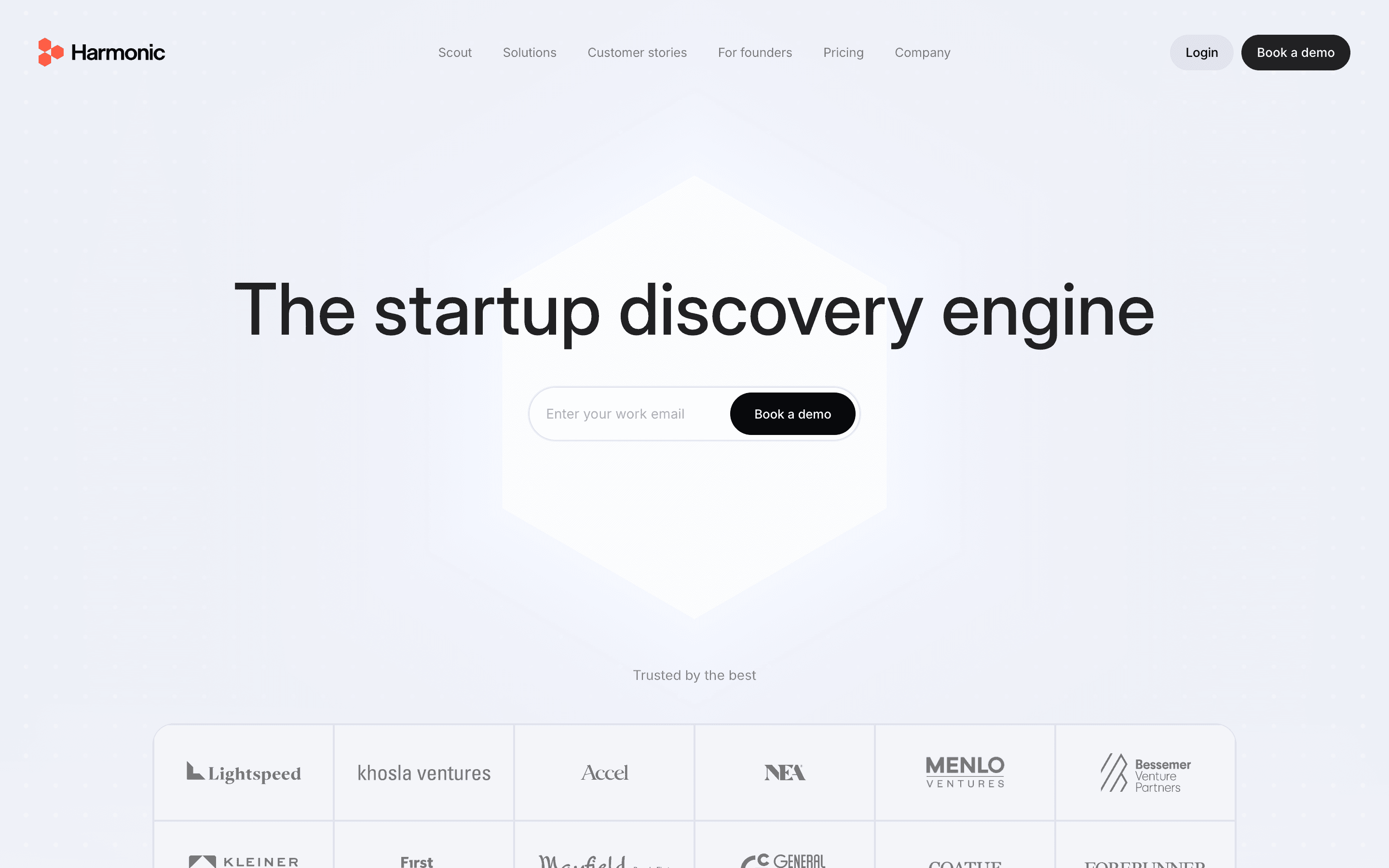
Harmonic combines company, people, and investor data with startup and founder discovery. Its search and monitoring cover founder backgrounds, talent activity, and company growth. Harmonic lists coverage of 40M companies, 200M people, and 250K investors.
Scout, its AI agent, can build market maps, research companies before meetings, and score prospects against a rubric. It can also run research on a schedule, such as stealth-founder monitoring, hiring updates, and funding sweeps.
Harmonic also collects fundraising information that founders submit directly.
Harmonic- Best fit
Teams that want startup and founder discovery with an AI research agent.
- Key features
- Company and people search
- Scout research and screening
- Recurring research
- Founder-submitted information
3. PitchBook
For ownership, valuation, and detailed transaction research.
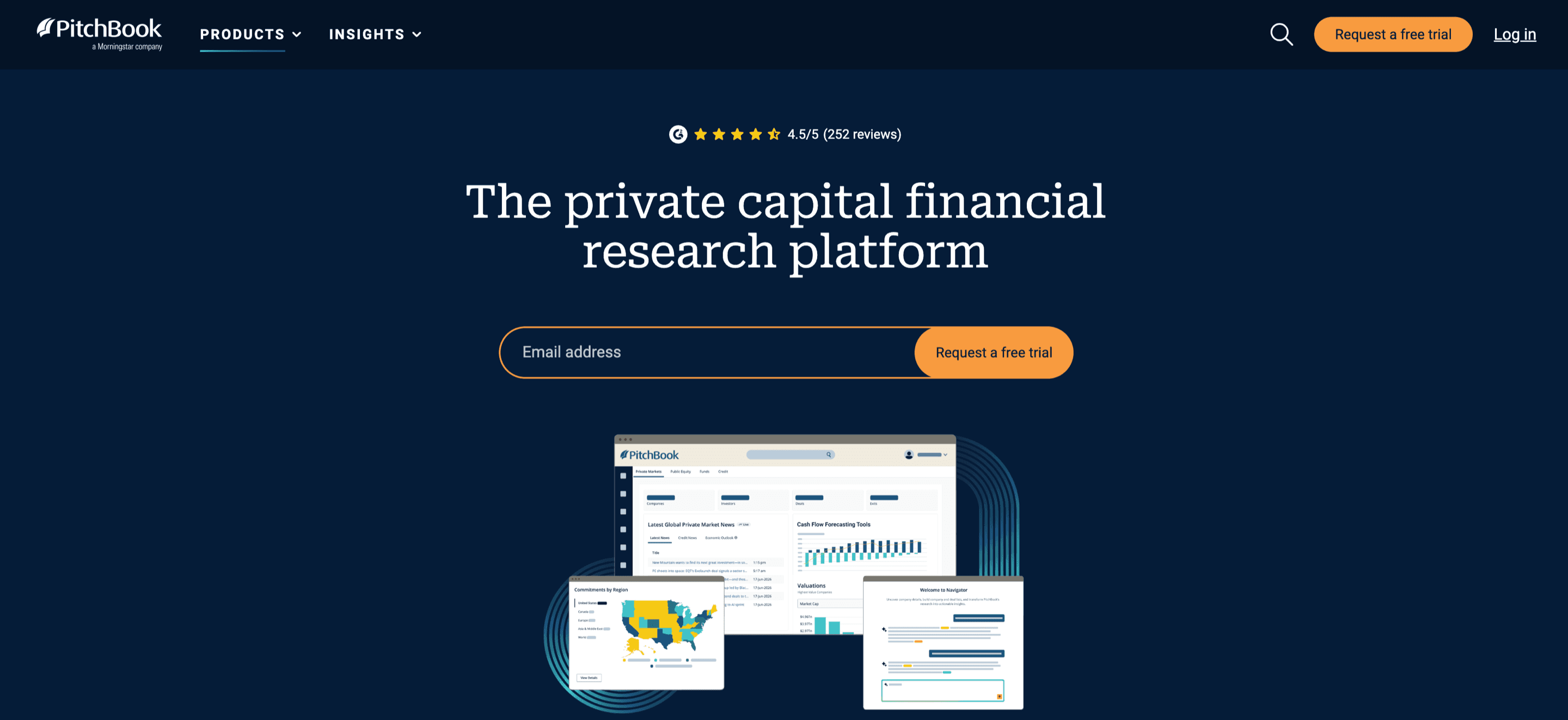
PitchBook supports company sourcing alongside financing and ownership research. Its profiles can include pre- and post-money valuations, cap tables, and financial statements. Its deal records cover areas such as transaction size, structure, terms, multiples, participants, and advisers where available.
That is the detail a growth investor needs to price and structure an investment: who owns the company, how earlier rounds were structured, and what investors paid in comparable deals. PitchBook earns its place with teams that do that work regularly.
PitchBook- Best fit
Investors whose research depends on cap tables, valuation benchmarks, and detailed transaction terms.
- Key features
- Company and investor screening
- Financing and ownership research
- Transaction comparables
- Fund research
4. Crunchbase
For self-serve company and funding research for individuals and small teams.
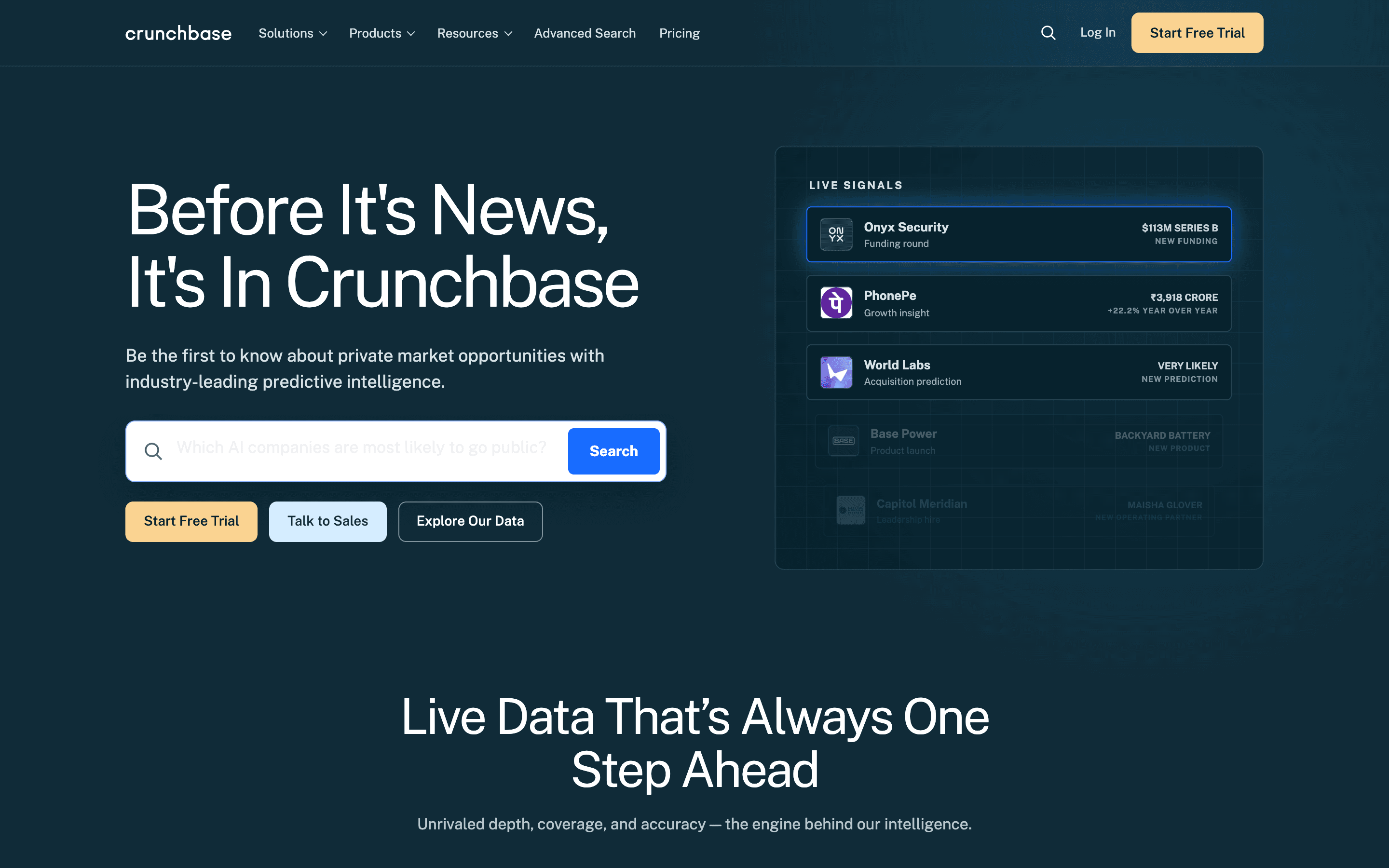
Crunchbase lets users search companies, investors, and funding rounds. An investor can build a list around industry, headquarters, employee count, funding stage, or the date of a company's last round, then research its profile and backers.
An individual investor can start with a free account or paid plan without arranging an enterprise purchase. Free search shows up to five results per search; Pro provides up to 1,000 and permits up to 2,000 exported rows per month.
Crunchbase- Best fit
Individual investors and small teams that want self-serve company and funding research.
- Key features
- Company and investor search
- Funding-round research
- Saved searches and alerts
- Lists and exports
5. Dealroom
For comparing startup ecosystems and venture activity across regions.
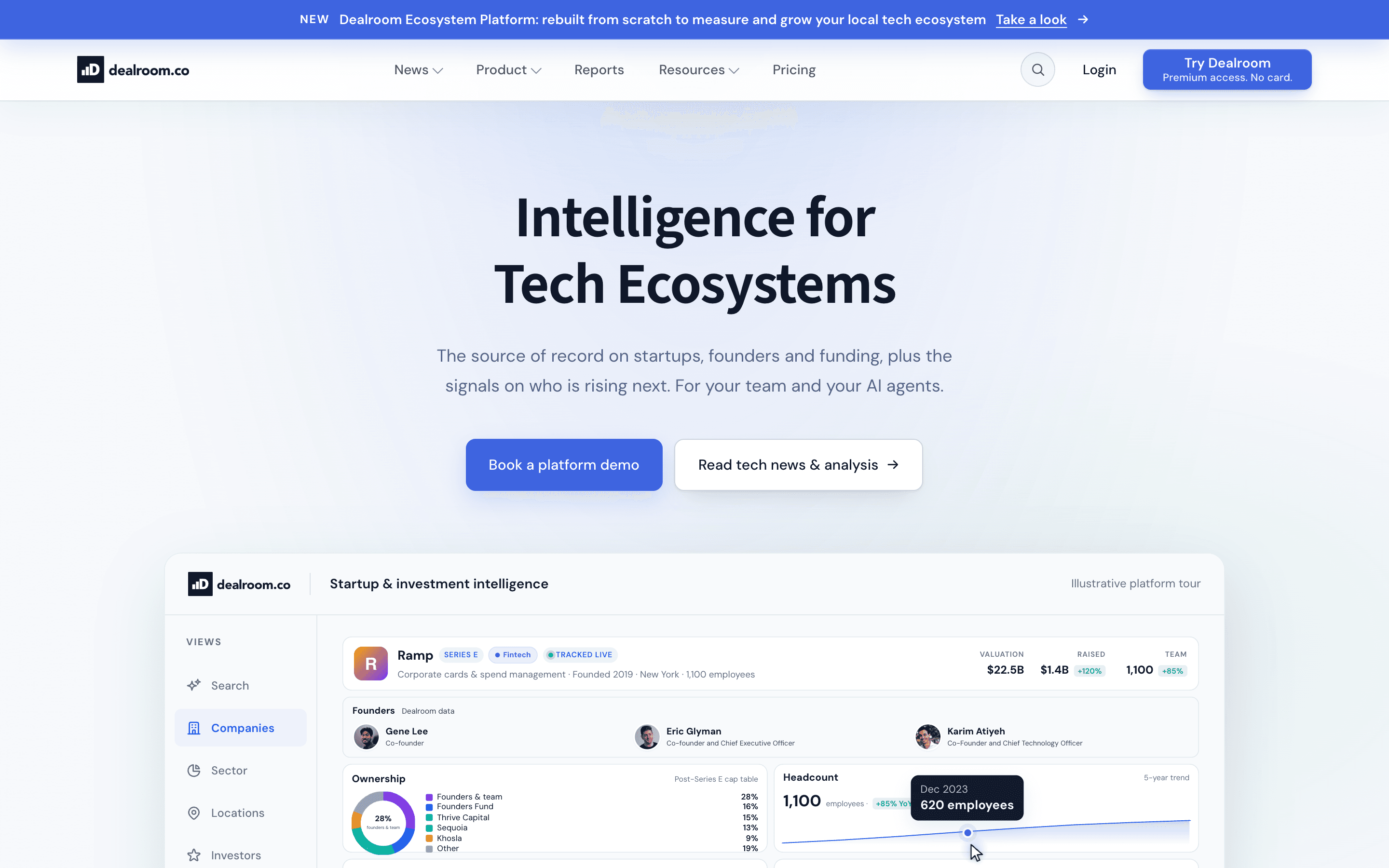
Dealroom combines company and funding information with ecosystem research. Its data comes from public sources, founder and investor contributions, and partnerships with governments and ecosystem organizations that contribute local information.
We would shortlist Dealroom when a fund is entering a new geography. Before looking at individual targets, the team needs to know which local investors are active, how funding is distributed, and which companies operate in each sector. Dealroom's government and ecosystem partners contribute local information for that picture.
Dealroom- Best fit
Investors building a view of a startup ecosystem or comparing activity across regions.
- Key features
- Company discovery
- Ecosystem mapping
- Company prioritization
- Monitoring
6. Tracxn
For screening companies by sector and business model.
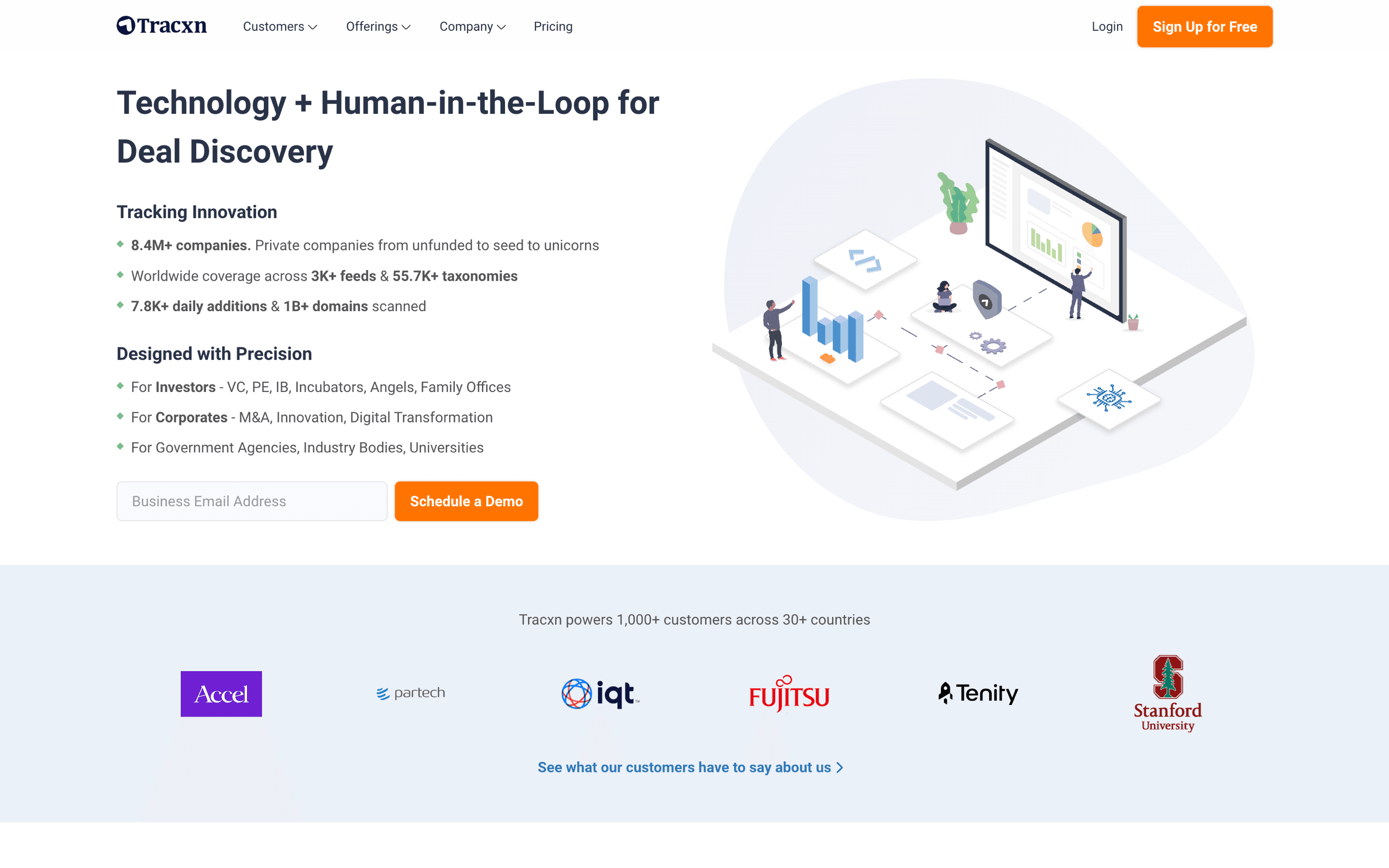
Tracxn organizes company search around categories including practice area, feed, and business model, alongside funding, location, founder, and financial filters. The financial filters go down to annual revenue, EBITDA, and net profit.
A fund can combine a business-model category with geography and funding criteria, build a company list, and use sourcing boards to follow that theme. Tracxn also provides company profiles covering areas such as competitors, financials, and financing history.
The business-model categories matter most when a broad label such as fintech or healthcare returns too many unrelated companies. We would shortlist Tracxn for a sector specialist that wants a structured universe of companies and a repeatable way to follow one segment.
Tracxn- Best fit
Investors building and maintaining company lists within specific sectors and business models.
- Key features
- Sector and business-model filters
- Sourcing boards and alerts
- Company research
- LiveDeals
7. CB Insights
For building a technology investment thesis with analyst and primary research.
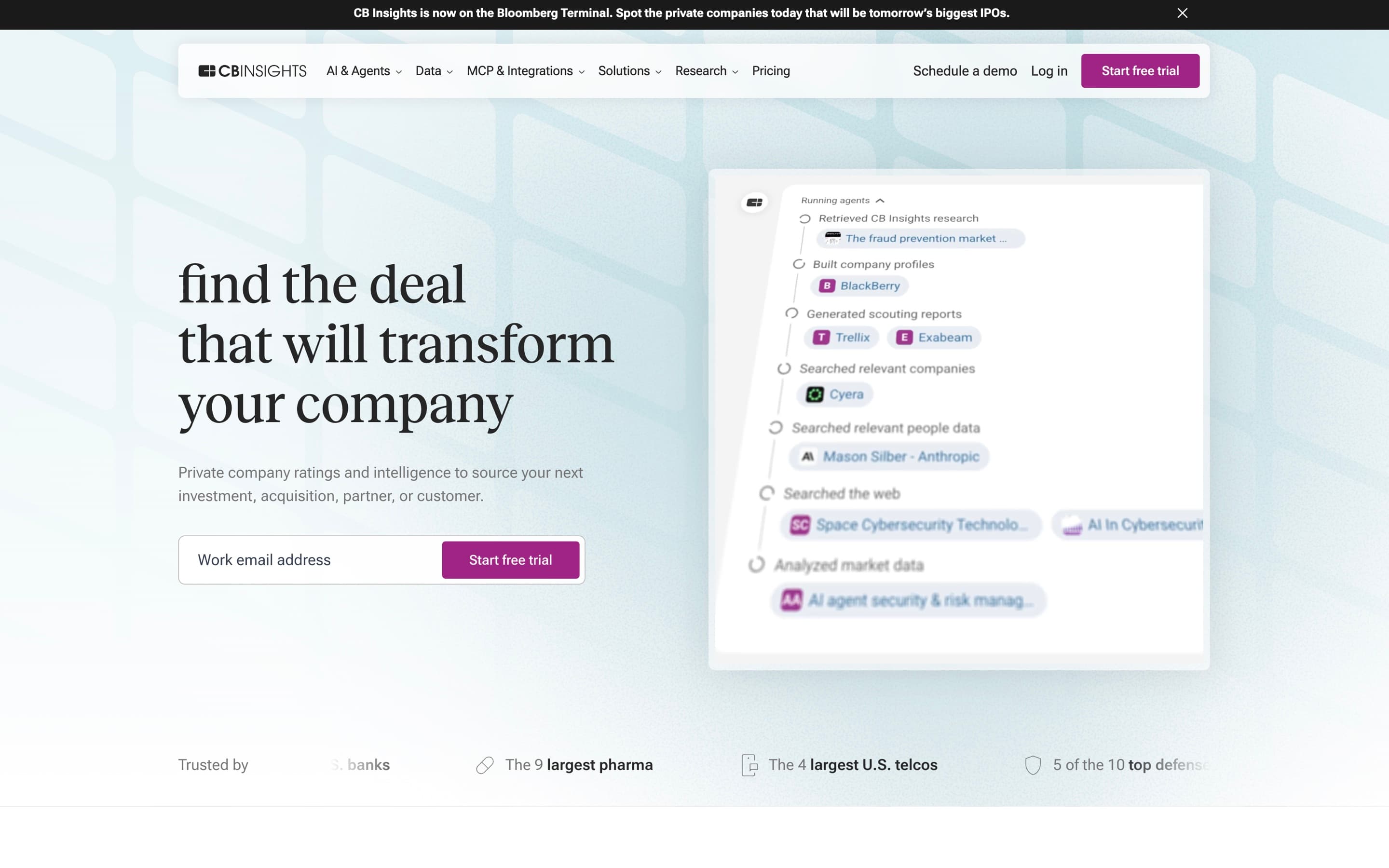
CB Insights combines private company data with analyst research, market maps, company briefings, and customer transcripts. It also offers executive interviews, analyst ratings, and the Mosaic company health score.
We would shortlist CB Insights when the team needs evidence for a technology thesis or investment memo: how a category is organized, which companies analysts are watching, and what founders, operators, or customers have said. That analyst and interview material is what it adds; for company discovery, a fund would pair it with a sourcing platform.
CB Insights- Best fit
Investors who want analyst research and primary company intelligence alongside a technology market map.
- Key features
- Company and competitive research
- Market maps and reports
- Primary research
- Ratings and indicators
How to choose a deal sourcing platform for your VC firm
Separate sourcing from ownership, valuation, and LP research
Before replacing a database, find out who else at the fund uses it. The same subscription may be how the fund finds companies, prices investments, and researches potential LPs. Moving sourcing to a new platform doesn't remove the need for the other two.
PitchBook shows the split. Specter also has financing history, but PitchBook goes further on what's used to price and structure an investment: cap tables, earlier financing terms, and what investors paid in comparable deals. If your fund uses PitchBook mainly for company lookups and sourcing, check whether Specter can take over that work. If it regularly relies on ownership records, transaction terms, or LP research, you have good reason to keep PitchBook alongside your sourcing platform.
Compare the research output for your investment thesis
Run the same thesis through each platform on your shortlist and compare what comes back. What counts as a good result depends on the fund. A seed fund backing technical founders needs people and career history, including operators whose companies aren't publicly known yet. A growth fund building a software shortlist needs company and financing records, revenue context, and a view of competitors.
Some platforms add inputs worth testing for: Dealroom's local data partnerships for ecosystem research, Tracxn's business-model classifications for narrowing a segment, and CB Insights' analyst interviews and customer transcripts for thesis evidence. A solo investor who mainly looks up funding rounds has a stronger reason to start with Crunchbase's self-serve access.
Match data delivery to the people doing the work
An investment team working in the product needs research ready before a founder meeting: a relevant shortlist, a sourced company brief, and updates on tracked targets. A data team building internal sourcing tools needs API or bulk access to the records and signals instead. For that team, compare dataset access and export allowances directly, because a seat subscription doesn't necessarily include them. Check whether financing and investor records come with the API or bulk plan. Harmonic, for example, lists financing and investor data as an add-on to its API and bulk plans, while Specter includes investors and transactions in its API.
Choosing between Specter and Harmonic
Harmonic and Specter overlap in founder discovery, AI research, scheduled monitoring, and market mapping. Specter covers more ground: 50M+ companies, 700M+ people, and 350K+ investors against the 40M companies, 200M people, and 250K investors Harmonic lists. It adds dated, investor-specific Interest Signals, sourced revenue information, and deeper financing records. Harmonic also accepts fundraising information that founders submit directly.
For side-by-side comparisons, see Specter compared with Harmonic, Crunchbase, Dealroom, and CB Insights.